
Okay, so check this out—I’ve been messing with wallets for years. Wow. At first it was just curiosity: can one wallet really handle Ethereum, BSC, and StarkNet without making me want to throw my laptop out the window? My instinct said “no way,” but then I kept running into one annoying thing—failed txs, sneaky gas spikes, and weird approvals. Something felt off about the whole experience. Really?
Here’s the thing. For power users who hop chains and do complex DeFi moves, the surface-level features matter far less than the little safeguards: seeing an estimated gas breakdown, previewing contract calls, simulating a swap across slippage and sandwich risk. Initially I thought a hardware wallet + MetaMask combo was fine, but then a few near-misses (and one actual lost nonce dance) changed my view. On one hand I liked MetaMask’s ubiquity—though actually it often left me blind to the fine print of a transaction. On the other hand I found that a focused multi-chain wallet built around simulation reduces that blind spot.
I’ll be honest: I’m biased toward tools that elevate clarity over flash. Myriad wallets promise multi-chain support. Few give you a real sandbox. The one I’ve started recommending to fellow traders and builders is rabby. Not because it’s perfect—it’s not—but because it treats transaction simulation as a first-class citizen. Hmm… that mattered more than I expected.
Why transaction simulation actually changes outcomes
Short version: simulation is like a rehearsal. Seriously? Yes. A simulated transaction can reveal if a contract will revert, how much gas will be consumed, and what intermediate calls might do. Medium sentences here to explain: without that rehearsal you either guess or overpay. Longer thought: when you repeatedly execute high-frequency trades or manage liquidity positions, those little inefficiencies compound into real dollars lost and opaque risk—so a tool that surfaces the unseen parts of a tx saves time and grief.
On-chain behavior is messy. Transactions can fail for reasons that aren’t obvious: gas price dynamics, underpriced calldata, or unexpected require() checks in a contract. My gut told me this for years, but seeing a simulated revert before broadcasting—that “aha!” moment—actually rewired my approach. Initially I shrugged at warnings, then I watched a simulated call show a hidden slippage multiplier and stopped a trade that would’ve lost me a few percentage points. Something small, but impactful.
Also, simulation helps with MEV exposure. Not perfect, not a silver bullet, but if you can see how a path interacts with liquidity or if a frontrunner could sandwich you, you can adapt. That kind of foresight is less flashy than a new token listing, but it’s what separates someone playing with DeFi from someone operating it professionally.
Installation and getting started—practical notes
Okay, so how do you try it out? Quick bits: install, connect, simulate. Really quick. First, add the extension (it works like other browser wallet extensions). Then import or connect your seed/hardware device. My instinct said “double-check permissions”—and do that. Oh, and by the way… set up a separate browser profile for trading to reduce extension conflicts. I know, sounds overcautious, but I’ve paid for not doing that.
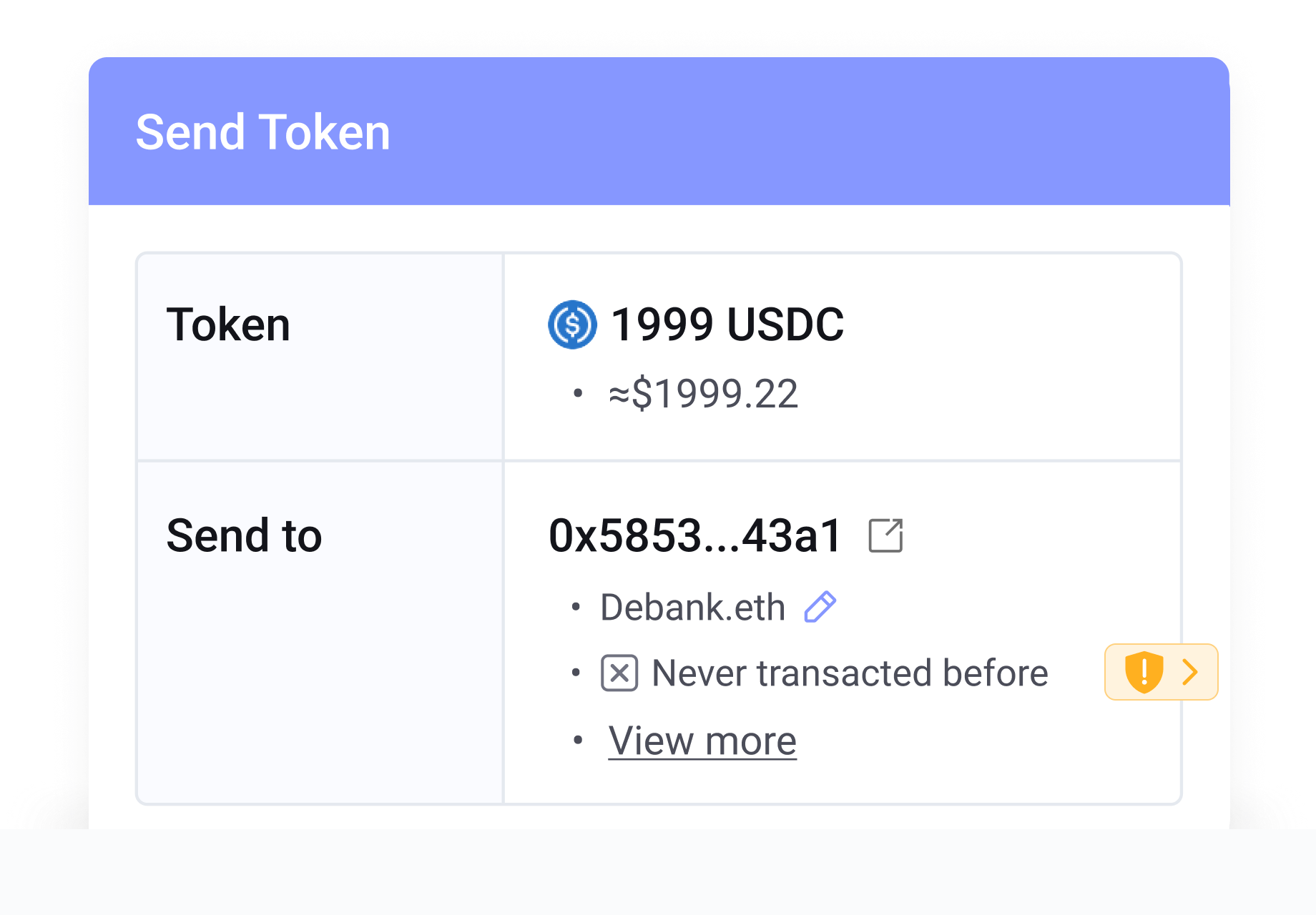
When you open a tx, look for three things: a human-readable call preview, gas and fee breakdown, and a simulation result that either passes or identifies likely reverts. Medium thought: if any one of those is missing, you’re making assumptions. Longer thought: good wallets will also surface contract creator info or source-verification links so you can cross-check what you’re approving—this saves you from approving token spend allowances to a malicious aggregator.
One practical niggle: wallet UIs still differ in where they show simulation results. Sometimes the simulation is on the tx modal, sometimes tucked in a separate pane. That inconsistency bugs me—it’s very very important that simulation results be front-and-center. But in use, the value shows quickly: fewer failed txs, clearer gas budgeting, and a reduced need to frantically rebroadcast with a higher gas tip.
Multi-chain reality: what actually works and what doesn’t
Multi-chain support is more than ticking boxes. Wow. Chains vary in fee models, mempool dynamics, and tooling. For example, EVM chains share many primitives, but rollups and L2s introduce different failure modes—sequencer reverts, batch gas anomalies, and so on. My experience: a wallet that claims multi-chain support needs chain-specific simulation heuristics, not a one-size-fits-all emulator. Otherwise the simulation gives false confidence.
On some chains, simulation can be slower or less deterministic. Hmm… that’s a pain. In those cases, use local gas buffers and conservative slippage settings. Initially I thought a 0.5% slippage cap was safe—then a bridged token swap nearly failed when liquidity shifted mid-broadcast. Actually, wait—let me rephrase that: slippage should be set with chain characteristics in mind, and simulation helps you pick that number intelligently.
Another trade-off: simulation sometimes increases the perceived complexity of a wallet because there are more options to parse—what if a user just wants “send ETH”? But for DeFi power users, that extra layer is welcome; it turns guesswork into data. On one hand you add steps; on the other, you dramatically reduce uncertainty and mistakes.
Security behaviors the wallet encourages
Good wallets nudge you toward safer defaults. For instance: auto-detecting if you’re approving an infinite allowance, warning on contract deployers with no verification, and flagging suspicious calldata patterns. I like that. I’m not 100% sure any wallet will prevent every scam, but nudges matter. They change decision-making in the moment—when you’re tired or rushed and might otherwise click through.
Another point: hardware wallet integrations. If you’re moving serious funds, pair the extension with a hardware signer. The extension should never be a single point of failure. My setup uses a cold device for long-term holdings and the extension for active positions; the combination gives me speed and a safety net. Small imperfection: pairing can be clunky across updates, so be ready for firmware-check moments—annoying, but manageable.
FAQ
What makes transaction simulation different from a dry-run?
A simulation executes the transaction in a sandbox using current chain state and returns outcomes you can inspect—reverts, gas used, events emitted—without broadcasting. A dry-run might be a local estimate; simulation connects to live state and thus surfaces real-world effects. This matters for complex DeFi flows and MEV risk checks.
Does simulation guarantee success on broadcast?
No. Nothing guarantees success because mempool order, miner/validator behavior, and rapid state changes can alter results between simulation and broadcast. Simulation reduces uncertainty dramatically, though—it’s a rehearsal, not a prophecy. Use it to make better calls, not to assume perfection.
How does the wallet handle multiple chains?
It adapts to chain-specific quirks—gas models, sequencer rules, and verification tooling—so simulations are context-aware. Still, expect some variability in speed and determinism across chains; that’s a blockchain reality, not a UI bug.
Alright—final note. If you’re a DeFi power user who values clarity over hype, try a wallet that integrates simulation into the core flow. It isn’t glamorous, but it changes outcomes. I’m not claiming it’s a miracle cure—there are limits, and some UX rough edges remain—but for serious multi-chain activity, the shift from “guess-and-hope” to “simulate-and-act” is night-and-day. Check it out: rabby. My instinct said this would help; after using it, the evidence was obvious.